Alaska Bears
Alaska is home to many plants and animals. With ample food and habitat resources, there is typically more than one species of animal. Like the bear. There are about four distinct species of bear in Alaska: brown bears, grizzly bears, black bears, and polar bears. Each bear has behaviors and characteristics that result from adapting within its environment. Learning about bears is your best way to be prepared, be aware, and be respectful.
Brown Bears
Alaska contains more than 98% of the US brown bear population. And, more than 70% of the brown bear population in all of North America. With 40,000 brown bears within the state, brown bears are the top predator in Alaska. (NPS) Aside from the islands west of Unimak and south of Frederick Sound, brown bears are found throughout the entirety of the state. (NPS) Most brown bears are similar in size to polar bears. Brown bears present a muscular hump and long claws, making them more efficient at digging and catching quick moose or caribou. While typically solitary creatures, you may encounter brown bears in groups around feeding sites.
Grizzly Bears
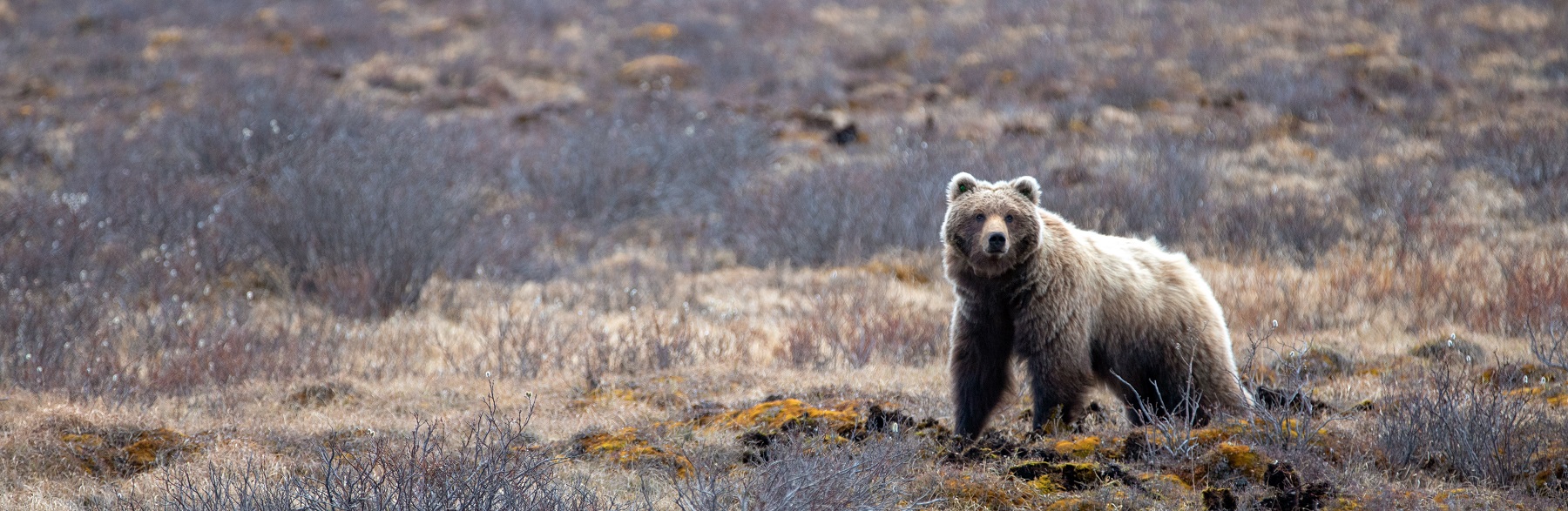
While technically classified as the same species (Ursus arctos horribilis), brown and grizzly bears do have some defining differences. Many people may use the names interchangeably, but brown bears are typically found along the southern coast of Alaska. Grizzlies are found more in the northern and interior regions of Alaska. (NPS) Grizzlies are smaller and live in lower densities than coastal brown bears, due to the availability of food in the regions. (NPS)
Kodiak Bears
Kodiak bears (Ursus arctos middendorffi) are the largest subspecies of brown bear in the world and are found only on Kodiak Island. They are classified differently from mainland brown bears and have been isolated from other bears for about 12,000 years, since the last Ice Age. (USGS) As a result, they have developed differently from mainland brown bears. Most brown bears weigh between 115 and 360 kg, while Kodiak bears commonly weigh between 300 and 600 kg. Aside from their size, they do not differ much from other brown bears. (NABC)


Black Bears
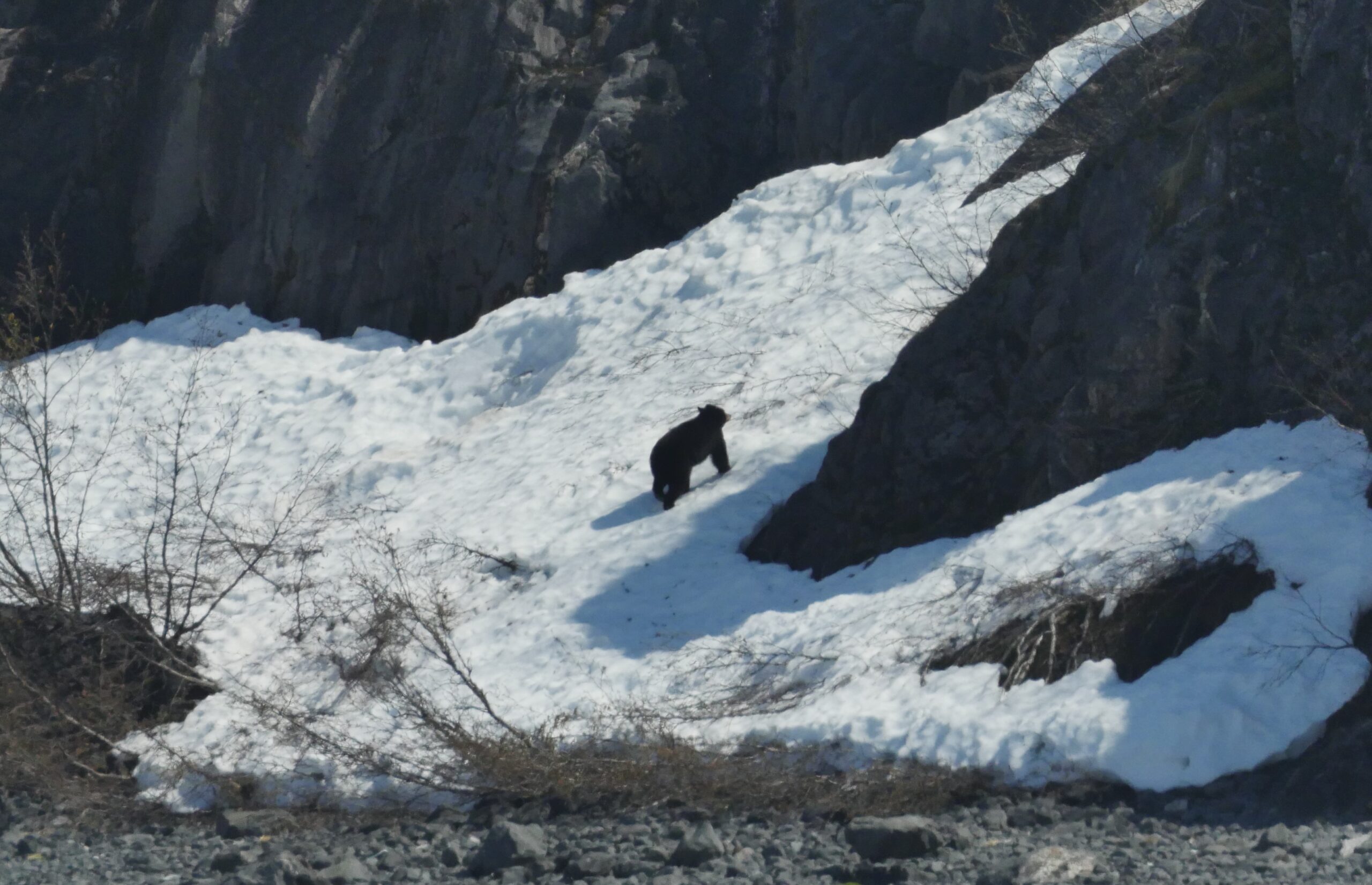
Black bears are the most abundant species of North American bears, with approximately 100,000 black bears in Alaska alone. They are also the smallest species of bear in North America, with adult males weighing only about 180-200 pounds when not hibernating. (NatGeo)Despite being named “black”, there are many different colors of black bears, including dark brown, cinnamon, or white.
A bluish-colored subspecies called the glacier bear can also sometimes be found in the Yakutat region of Alaska. (NatGeo) Contrary to brown bears, black bears have straight facial profiles and short claws. Black bears are also a rather solitary species, only pairing up briefly during mating seasons, with mothers remaining with cubs for about a year after birth. Their only adversary is the much bigger Grizzly bear. (IERE)
Polar Bears
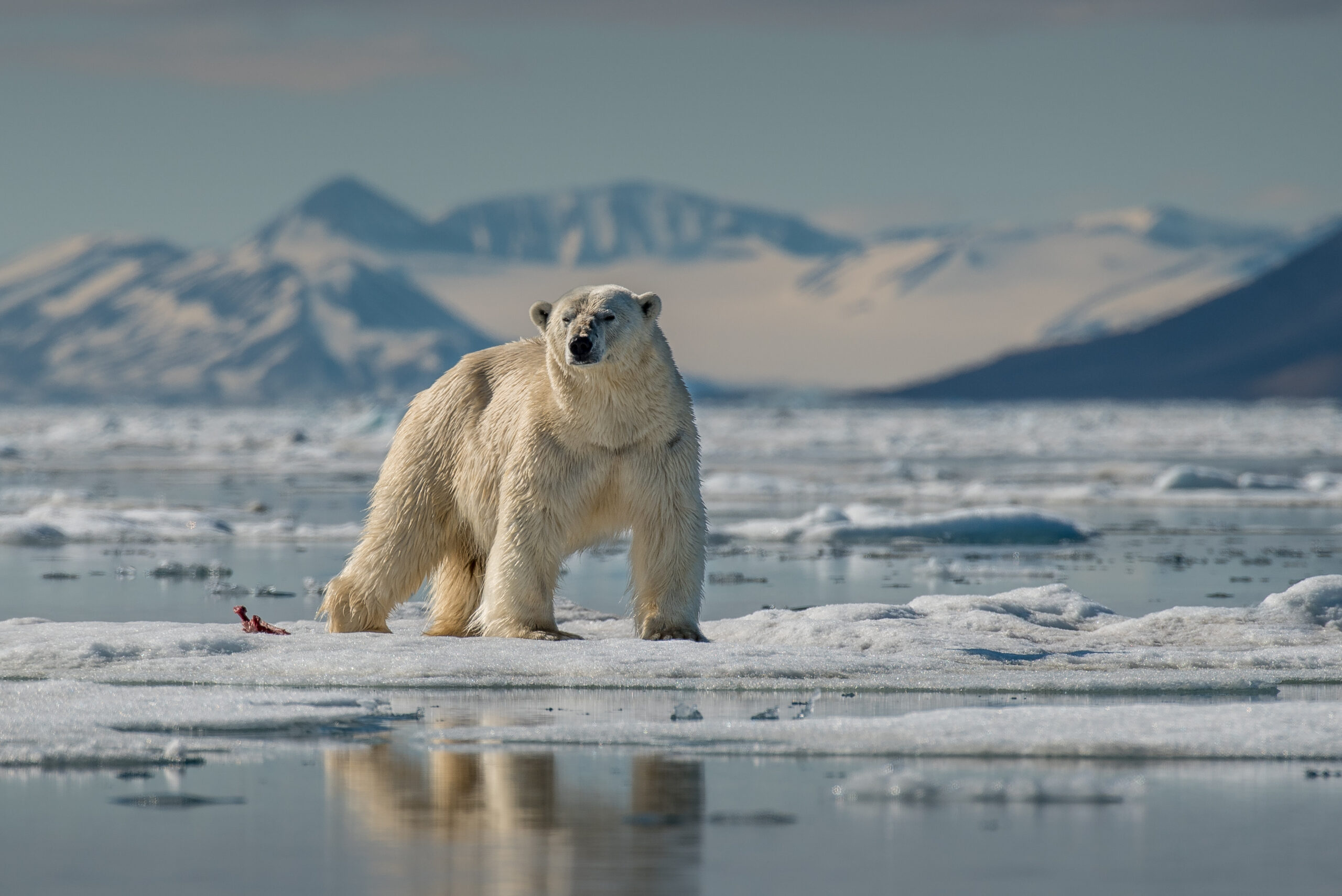
Contrary to what some may expect, polar bears do not live on the inland glaciers of Alaska. There are 19 separate populations of polar bears within the state, all living in coastal regions, typically toward the North. (FWS) Their diet consists mostly of seals, and they spend much of their time riding the Northern ice floes hunting them. Primarily white or yellowish in color, their fur can become stained, leaving them to look more like a brown bear to the untrained eye. Their coat is water-repellent, and even the bottom of their paws is nearly completely covered in fur. (NLM)
Bear Safety
When recreating in Alaska, you are almost always in bear territory, and chance encounters with bears are always possible. When traveling in the backcountry, make noise, talk, or play some music, so if you come across a bear, you don’t catch it by surprise. A surprised bear is a dangerous bear, particularly if you encounter it while feeding or with a cub. (NPS) Also, carry bear spray with you in the backcountry, and keep it easily accessible in case of an encounter. The bear spray does you no good if it’s stuck in the bottom of your pack.