Effects of the Midnight Sun
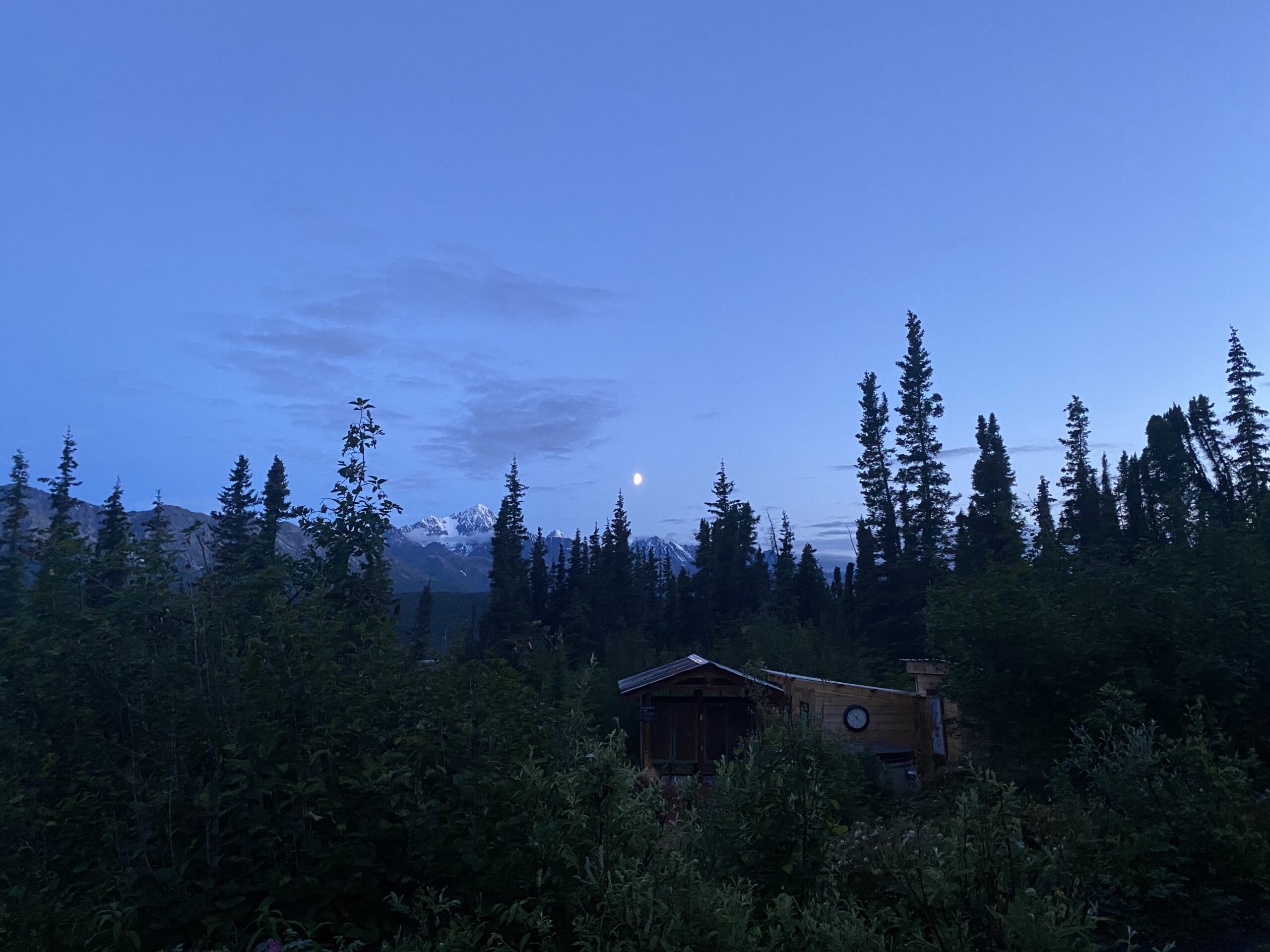
In regions near or within the Arctic Circle, such as Alaska, a natural astronomical phenomenon known as the ‘midnight sun’ occurs. This refers to the season when Earth’s axial tilt creates full days of sunlight. Within the Arctic Circle, the sun remains above the horizon for all 24 hours. Regions close to the Arctic Circle experience near-constant sunlight, though sometimes have more dusk- or dawn-like light rather than full sunlight. (Time and Date)
So how does this ‘midnight sun’ affect all the beings that explore and inhabit Alaska? Here are a few points on how beings adapt and acclimate during this season. And some helpful tips for those visiting regions that experience the ‘midnight sun’.
Light Bending
The ‘Midnight Sun’ occurs during the summer months and peaks at the solstice, when one of Earth’s axial poles is tilted most toward the Sun. The axis tilt is about 23.4 degrees toward the Sun. (NASA) The midnight sun specifically happens only in polar regions.
In some regions, the phenomenon lasts a few days, while in others it can last almost four months. When Earth’s axis is tilted toward the Sun, it illuminates the high latitudes. More sunshine means most beings on Earth change their behaviors and routines to balance this seasonal occurrence. (Nature)
Acclimating and Exploring
The midnight sun is a phenomenon some people plan for years and travel many miles to experience. Some folks are native to these areas, and their cultures show how they have learned to live through a season with so much sun. Animals also change their behaviors as this atmospheric change happens.
During these long daylight hours, you will often hear birds chirp all day long, because they actually do. These long daylight hours give nesting parents more time to mate, gather food, and raise their young, and hopefully eat enough to be ready for their next migration or to nest for the winter season. Most animals use this time to gather food, eat, mate, and have offspring. Predator animals make the most of the sunlight, making it easier to find food, while prey animals spend more time in cool areas, evading predators. Other animals that do not hibernate, like caribou, are already acclimated to the extreme shifts and take ‘power naps’ between grazing regions. (Library of Medicine) Rodents have a pretty strict internal 24-hour clock that doesn’t change much from day to day. (Library of Medicine)
People are a bit stranger than most animals and seem to need a little more comfort to adjust to the long daylight. Once the sunlight lasts that long, it essentially tells the brain/body to stop making melatonin, the natural chemical that signals sleepiness. (Oxford Academic)So people have to find their own way to signal that to themselves. Some people get blackout curtains to mimic nighttime; others use a simple sleep mask and earplugs to block out chirping birds. Without darkness and proper sleep, people tend to report feeling fatigued, disoriented, or experiencing ‘time confusion’. (Science Direct)
Life Under the Midnight Sun
Like some other animals, people native to these regions use the midnight sun to do as much outdoor work as they can. (Geophysical Institute) It is also when gardens and wild foods grow fastest and largest. (Library of Medicine) In addition to working hard, the midnight sun is a time for celebrating.
Some regions hold festivals, like Fairbanks, which holds the ‘Midnight Sun Festival’. (Explore Fairbanks) There are even more late-night, or day, activities, like midnight hikes and photography. In other countries, like Iceland, the midnight sun is also a great time for whale watching. (Polar Research) Simply put, this phenomenon brings out more energy in everyone who experiences it. Just remember, good sleep is just as important as high-energy adventures.