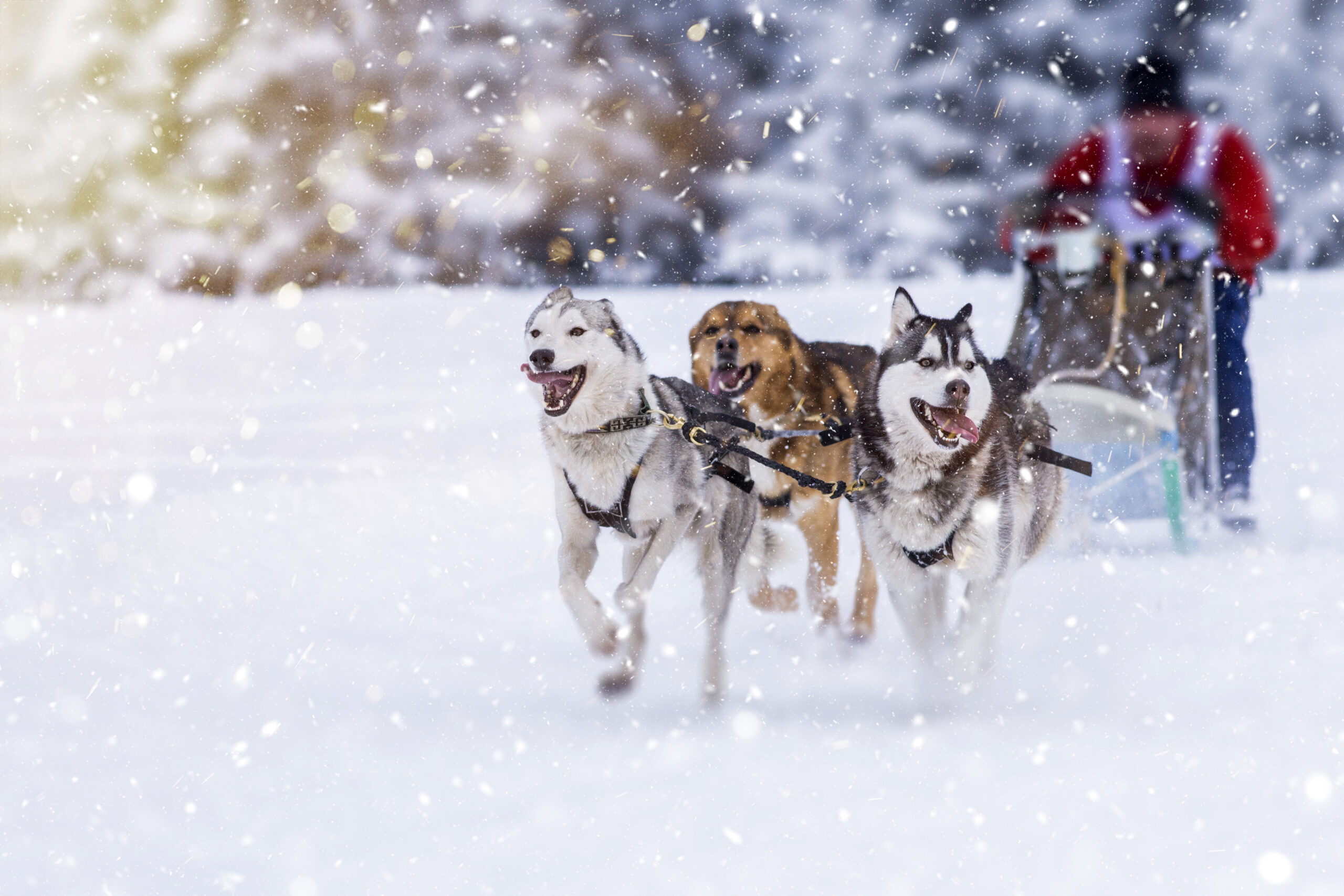
Brief History of Dogs, Humans, and Mushing
Over thousands of years, humans (Homo sapiens) and dogs (Canis lupus familiaris) have evolved together, forming a unique bond that has shaped both species. This partnership originated from early interactions between ancestors such as Neanderthals (Homo neanderthalensis) and wolves (Canis lupus).(Origin of Dogs) For many groups, including the Inuit, Athabaskans, and Iñupiat of the Arctic and subarctic, the relationship between humans and dogs was essential. Trade routes, supplies, and survival often depended on these close, cooperative relationships, with both species adapting to thrive together in challenging environments. (UCDavis)
For thousands of years, humans relied on dogs to transport goods and materials, move camp equipment, and hunt alongside them. What kind of reciprocity fostered such a deep bond? Both species provided each other with greater safety and survival in harsh environments: humans provided warmth, food, and shelter, while dogs offered keen senses as invaluable hunting companions. These essentials fostered emotional and psychological support, which was vital for successful evolution.(Evolutionary Anthropology)
Progression to Dog Sledding
In arctic environments, people, dogs, and sleds have been capable of transporting cargo, fuel, and medicine for quite some time. In regions with more land and herd animals, dog sledding also herded caribou. Additionally, it was vital for nomads to travel long distances quickly.
Dogsledding has long been practiced globally. In the early 1900s, Alaska, a friendly dispute over which team was fastest, led mushers to suggest an official recreational race to showcase their skills. In 1908, the first official dog-sled race occurred in Nome. As new transportation options emerged in the 1900s, mushing evolved into a sport, honoring the hard work of the past and the enduring spirit of dogsledding today. (Mushing)
Dogsledding in the 21st Century
Since 1908, many new festivals and races have been added to celebrate the sport of dog sledding, including the famous Iditarod. (Britannica) Many of these races honor the history of dog sledding, the teamwork that evolved from the relationship between wolves and humans to survive and sustain communities, and the trade routes of today. (Scientific Report)
Dogsledding is an example of how humans and dogs have adapted to community needs and environmental changes worldwide. Since the domestication and taming of both wolves and humans, we can see similarities in traits that were important then and now. (USGS) For example, many dogs have traits of a husky or a malamute because they have thick fur coats to keep them warm and wick away water, and have adapted to arctic environments for quite some time. (Britannica)
In many areas globally, both humans and dogs have demonstrated the ability to work as a team under harsh environmental conditions, to have both physical and mental stamina, and to communicate and address needs and problems as they arise. (Environmental Research and Public Health) Much like humans, dogs are now more skilled and varied in their work. Dogs and humans now collaborate in specialized ways. Some are trained in medical work, security, detection, livestock herding, and community or therapeutic support.